UK Kitchen Trends for 2026: Warmth, Texture and Timeless Design
17th January 2026

As we head into 2026, kitchen design in the UK is evolving in a clear and confident direction. Homeowners are increasingly looking beyond short-lived trends, instead favouring kitchens that feel warm, tactile and thoughtfully designed to stand the test of time. At Parker Bathrooms & Kitchens, we are seeing a decisive shift toward spaces that prioritise comfort, craftsmanship and longevity, without sacrificing contemporary style.
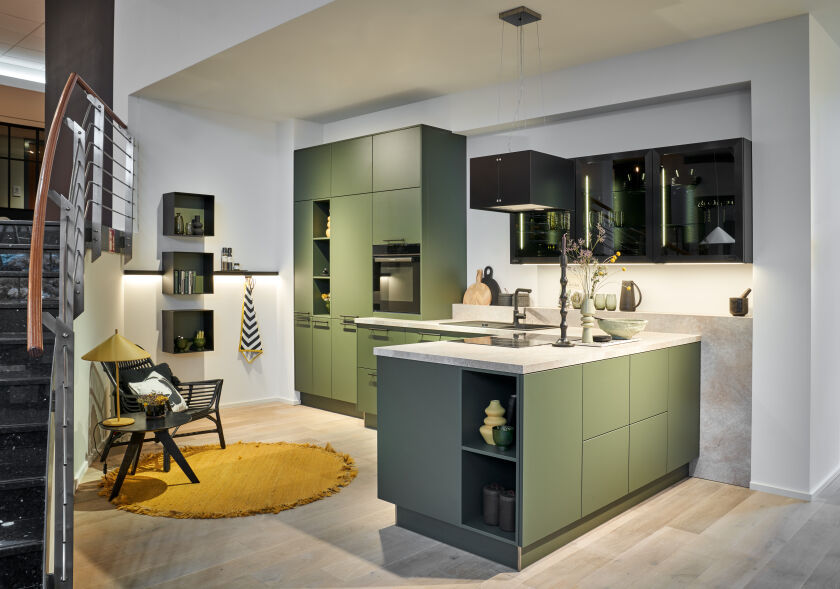
One of the most noticeable changes for 2026 is the move away from cool greys and stark whites. While these tones have dominated for over a decade, they are now being replaced by warmer, more natural colour palettes. Soft mushroom, stone, taupe and clay tones are becoming the new foundation for modern kitchens, creating spaces that feel calmer and more welcoming. Alongside these neutrals, deeper accent colours such as olive green, burgundy and muted ochre are being used to add character without overwhelming the room. These colours work particularly well in British homes, where natural light can vary throughout the year, helping kitchens feel inviting in all seasons.
Natural materials are also taking centre stage. Wood is no longer reserved for feature islands or open shelving; instead, we are seeing full timber cabinetry, wood-effect finishes and textured veneers used throughout the kitchen. Oak and walnut remain firm favourites, valued for their warmth and versatility. Stone surfaces are becoming more expressive too, with veining, movement and texture embraced rather than minimised. Quartz, quartzite and sintered stone worktops with character are being selected not just for durability, but as a defining design feature in their own right.
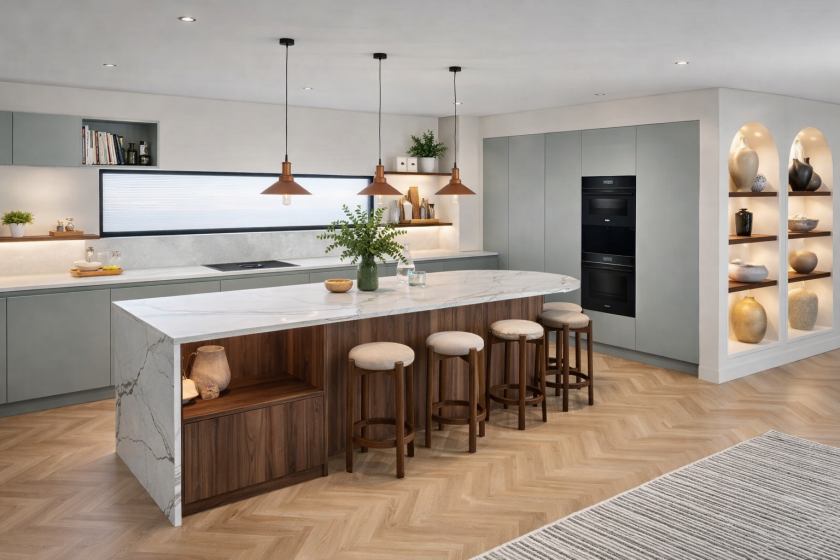
Form is evolving alongside material choice. Kitchens in 2026 are softer in shape, moving away from rigid lines toward more organic, sculptural forms. Curved islands, rounded worktop corners and gently arched cabinetry details are increasingly popular. These elements help kitchens feel less clinical and more connected to the wider living space, which is particularly important in open-plan homes. Curves also improve flow and usability, making the kitchen feel more intuitive and comfortable to move around.
Layout design is becoming more intelligent and lifestyle-focused. Rather than relying on the traditional work triangle, kitchens are now planned around zones that reflect how people actually use the space. Dedicated areas for cooking, preparation, storage, drinks and entertaining allow multiple people to use the kitchen at the same time without disruption. Walk-in pantries and feature larders are especially sought after, offering both practical storage and an opportunity to introduce lighting, glass doors and bespoke internal fittings.

Minimalism remains influential, but it has softened considerably. The ultra-sleek, handleless kitchens of previous years are giving way to what can best be described as warm minimalism. Clean lines are still important, but they are paired with tactile finishes, subtle textures and thoughtful detailing. Super-matt cabinetry, satin metals and integrated lighting create a refined look that feels luxurious rather than stark. Handles are making a confident return too, with aged brass, bronze and textured finishes adding personality and a sense of craftsmanship.
Kitchens are also becoming more seamlessly integrated with the rest of the home. As open-plan living continues to dominate UK interiors, kitchens must sit comfortably alongside dining and living areas. This is driving demand for furniture-style cabinetry, concealed appliances and cohesive colour schemes that flow from one space to the next. Matching finishes, continuous surfaces and carefully considered lighting help the kitchen feel like part of a unified interior rather than a separate functional zone.
Sustainability is no longer viewed as an optional extra. Clients are increasingly conscious of the environmental impact of their choices and are prioritising quality over quantity. Kitchens designed for 2026 focus on durable materials, responsible timber sourcing and layouts that can adapt over time. A well-designed kitchen is now seen as a long-term investment, both in terms of lifestyle and property value.
Ultimately, UK kitchen trends for 2026 reflect a desire for spaces that feel personal, comfortable and enduring. Rather than chasing fashion, homeowners are choosing kitchens that balance contemporary design with warmth and practicality. At Parker Bathrooms & Kitchens, we specialise in creating bespoke kitchens that respond to these shifts, combining considered design with high-quality products and expert planning.
If you are thinking about updating your kitchen or planning a new space, our team would be delighted to guide you through the latest ideas and help you create a kitchen that will look and feel right for years to come.